Tuesday, 4 November 2014

Term 4 Week 4: Guy Fawkes and Fireworks Music


This is the Houses of Parliament.  


This week, on November 5th, Guy Fawkes is celebrated in Great Britain,  and also in New Zealand. It commemorates the failed attempt of a group of men to blow up the Houses of Parliament in London in 1605. They wanted to  kill King James and all his family and politicians who supported him.  Even though he wasn't the leader of the group,  Guy Fawkes was in charge of the explosives, and he was the one found with the barrels of gun powder.  King James was so pleased that the plot was discovered that he ordered a big celebration with bonfires every year. 
Guy Fawkes


 Ever since then,  children have made effigies of Guy Fawkes (dressed up dummies - now called 'guys') and burnt them on a large bonfire. Children used to makes these guys then take them round their town and ask for a penny (one cent) for their guy.  They would then use this money to buy crackers to let off at the time of their bonfire. 
This is a photo from a New Zealand newspaper in 1932 of a young boy taking his guy around the streets to collect pennies to buy crackers.


Today, people seldom make guys - or have bonfires - to commemorate Guy Fawkes.  Many people buy fireworks and let them off in their back yard. There are a lot of people who want to ban fireworks because of safety issues - for animals, people, and property. It tends to be the fire service's busiest night of the year! 

This is a link  a New Zealand site  with the story behind Guy Fawkes, and includes safety tips and how to make sure animals are kept safe.

And another link to Kiwi Kids News Guy Fawkes article 


Here's a Horrible Histories short video about the gunpowder plot led by Guy Fawkes.


This is a simple story - with animation - that tells the history of the gunpowder plot, and how we came to celebrate Guy Fawkes night.

This is a short video about Guy Fawkes by some children who are learning English in Czechoslovakia. 


This is a slide show with captions - if you are a good reader, you will get a good idea of the story of Guy Fawkes from this link.


 Remember, remember the fifth of November,
Gunpowder treason and plot.
We see no reason
Why gunpowder treason
Should ever be forgot!


Guy Fawkes, Guy Fawkes,  'twas his intent
To blow up king and parliament.
Three score barrels were laid below
To prove old England's overthrow.


By God's mercy he was catch'd
With a darkened lantern and burning match.
So, holler boys, holler boys, Let the bells ring.
Holler boys, holler boys, God save the King.
-------

Fireworks Music (144 years after Guy Fawkes)
The Allegro  (La Réjouissance) is the fourth movement from Music for the Royal Fireworks, by George Frideric Handel.  It was composed in 1749.  Rejouissance is a French word and it means rejoicing.  (We've already learnt a bit about Handel in Term 2.) 
 King George II *of  Great Britain asked Handel especially to compose music for an outdoor concert and  fireworks display in Green Park, London, to celebrate the end of a war that England had been involved in (The War of Austrian Succession).   


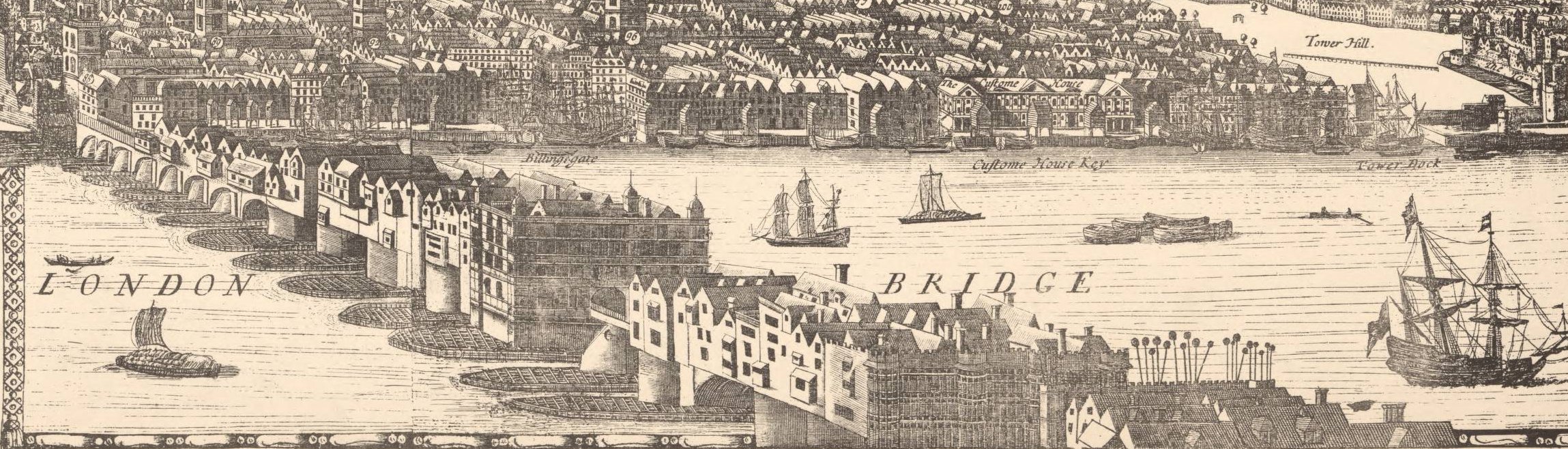
There were very few outdoor concerts then. So many people were interested in this performance that there was a three hour traffic jam (horses and carriages) on London Bridge as twelve thousand people made their way to the rehearsal a week before hand. The actual  event  one week later was not entirely successful – the day was rainy, many of the fireworks didn’t go off,  part of the staging pavilion caught fire, and two people died.


King George had insisted that Handel write the music for percussion, brass and woodwind instruments only – no strings  at all – and Handel followed these instructions for this special performance. Later, Handel rewrote the music for another indoor performance to include violins - so both he and the King got their own way.


This is a recording of the entireMusic for the Royal Fireworks. Can you see that the instruments look a little different to the ones you usually see in orchestras? These are ones that the musicians might have played in Handel's time. 

(*George II was the great-grandson of King James I)

Test your knowledge of instruments of the orchestra with this quiz. 


Tuesday, 28 October 2014

Term 4, Week 3: Hallowe'en and Día de los Muertos

This is the link to The Nutcracker ballet  that the junior classes have been watching at the beginning of lessons.  Look at how the dancers tell a story without using words. How do the dancers show they are talking to other people? 
A scene from The Nutcracker
 Hallowe'en
There are many stories about the origins of Halloween, from the area which is now Ireland, United Kingdom and northern France. Over two thousand or more years, the occasion changed from a pagan ritual to a day of fun, dressing up, parties, decorations and sweet treats for children.

Halloween has evolved  from an ancient Celtic  festival (Samhain, pronounced sow-in) which marked the end of the harvest season (autumn) and the beginning of the long, dark , cold winter season. This was on October 31st,  and on November 1st they celebrated their new year. They also believed that the change of seasons was a bridge to the world of the dead. Celts believed that on the eve of the new year, the ghosts of the dead returned to earth.  There were bonfires and celebrations. When the Romans conquered most of the Celtic lands, they  included some of their traditions in the festival

In the 8th century (700s), Pope Gregory III decided that all saints and martyrs would be honoured on November 1st.  It would be called All Saints' Day and  would include some of the traditions of the Celtic Samhain festival. The night before All Saints' Day was called "All Hallow's Eve" and eventually shortened to Hallowe'en" (e'en short for evening).

In 1000AD, the church made November 2nd All Souls' Day - to honour all dead and the was also celebrated with festivities. 

Over time, the the festival changed from a religious festival to a community celebration and involved children dressing up and trick-or-treating.

Hallowe'en celebrations  evolved further in America as immigrants brought their traditions and festivals with them to their new country. It changed into a community event and lost any of its connections with religion. Further over time, and with commercialism and advertising, it has evolved into a huge industry with billions of dollars spent on decorations, costumes, parties and special foods.

Here's an easy dance called The Monster Shuffle.  Follow the words and mirror what the group are dancing. 

This is another dance called the Skeleton Dance . It helps you learn your left and right sides - and the names of your bones.

Día de los Muertos: 
 The Day of the Dead is a holiday celebrated on November 1st (for children)  and 2nd (for adults)  and is recognised throughout Latin America, but especially in Mexico.  Día de los Muertos honours the dead and evolved from a combination of ancient Aztec rituals and the Catholic religion which came with the Spanish conquistadors.

Although it looks similar to Halloween, it is quite different.  It's not about being scary or frightened or tricking people. The festival celebrates  the lives of deceased family members with food, drink, parties, parades and activities the deceased enjoyed when they were alive. It helps keep deceased loved ones part of the community. It is a time for happiness and celebration - not sadness or mourning.

Symbols of the celebration are calacas and calaveras (skeletons and skulls)
which can be sweets, masks or dolls. Although they may look scary, they are intended to be happy and having fun.

Families decorate the graves of loved ones, and make ofrendas to honour individual loved ones. These are decorated with flowers, candles, food, photos and other items to remember the person.


Here's a video in Spanish about Día de los Muertos. You may be able to understand some words - especially if you follow the English subtitles.

Here's a short documentary item about Día de los Muertas. You might be able to understand soem of the words spoken by the people being interviewed.

Here's a short movie made especially for people learning about Mexico and its culture.

This video tells you what you need if you were going to celebrate Día de los Muertos.

Here's some skeletons dancing. They may look a bit scary but they are meant to be happy and having a fun time.   El Twist del Esqueleto 

This is a counting song - and telling the time. It's not meant to be scary.
Learn to tell the time in Spanish, with dancing skeletons.

Tuesday, 21 October 2014

Term 4 Week 2: Diwali


This week we have a guest writer for our blog. Thank you to Shristi from Kea 1 for researching and writing this about Diwali.


Diwali is the festival of lights which is celebrated once a year.This is the story of how Diwali originated: 

Once upon a time there was a great warrior Ram and his beautiful wife Sita. There was also the meanest demon named Ravan. He had ten heads and twenty arms. He wanted Sita to be his wife but one day he kidnapped her and took her away in his chariot all the way to his kingdom. But clever Sita managed to leave a trail of her jewellery for Ram to follow so he could find her. Ram found her trail and followed it, but along the way he found a monkey named Hunaman who agreed to help him find Sita, and Ram became his good friend.

Hunaman called his monkey and bear friends to help fight the evil servants of Ravan. After a long search they found Sita trapped on the island, but the monkeys and bears couldn’t get across so they built a bridge.

Finally it was complete they rushed across and fought a nasty battle. Ram killed Ravan with his magic arrow. Then Ram could take his beloved wife home. The whole world welcomed them back by lighting divas (lights).

Diwali is an Indian tradition now,  and this story was one of the legends behind Diwali. This year, we are celebrating Diwali on the 23rd of October with delicious sweets that our parents make,  and lights to celebrate good over evil. We wear our traditional costume and the most exciting part is the fireworks‼ (BOOM‼, BOOM‼) Diwali also celebrates good over evil and India’s Happy New Year. Diwali goes on for a period of 5 days.
By Shristi (Year 7)
 Here is a video of the story of Diwali.


Here's a nursery rhyme about Diwali.

Here's a song wishing a Happy Diwali
Here's a video of the dance and song Jai ho from the movie Slum Dog Millionaire.  Can you hear that the language changes to Spanish towards the end?

Here's a group of children dancing to Jai ho.  Watch the little guy in the middle.

You can copy this version of the dance  yourself.

Here's a group of people dancing to Jai ho in America.


Here's a Christmas song you may not have heard before, sung by Bob Dylan.
www.nancymusic.com
Vocabulary for this week:

Diwali - "festival of lights" which celebrates the New Year. It is India's most important holiday.
banished – sent away and not allowed to come back; banned
exile – where you are when you are banished and not allowed to come back home.
chariot – a kind of horse drawn carriage
diva – an oil lamp
rangoli -  a colourful pattern on the floor

Wednesday, 15 October 2014

Term 4 Week 1 - Count down to Christmas

http://classicbells.com/info/BodyStraps/GradBells.jpg


Jingle Bells, Jingle Bells 


Jingle Bells is one of the best-known and most-often sung Christmas songs in the world.  It was written by James Lord Pierpont (1822-1893) and was published in 1857. It was actually written to be sung for American Thanksgiving. There's a bit of confusion over where the song was written.  A plaque in Medford, Massachusetts claims that Pierpont wrote the song there in 1850, inspired by the town's popular sleigh races.   Its original copyright was under the name" One Horse Open Sleigh" in 1957. It is now in the public domain, which means anyone can sing it or use the tune.  In 1857, Pierpont was actually the organist of the Unitarian Church in Savannah, Georgia, and married the daughter of the mayor.

In the days before cars,  it was common to decorate horses' harnesses with bells as a way for drivers of sleighs to hear each other approaching - especially when they couldn't be seen - because the snow muffles any sounds the  sleighs and horses' hooves made. The rhythm of the tune mimics the rhythm of the trotting horse's bells.


Jingle Bells
Dashing through the snow
In a one-horse open sleigh

O'er the fields we go
Laughing all the way

Bells on bobtail ring
Making spirits bright
What fun it is to ride and sing
A sleighing song tonight!

Jingle bells, jingle bells,
Jingle all the way.
Oh! what fun it is to ride
In a one-horse open sleigh.


Here's a Kiwi version of Jingle Bells.  
Here's a Wii Dance to Jingle Bells 
    A heavy metal version of Jingle Bells 

Here's a version with an actual sleigh ride and a few more verses.  

Here's an orchestra play Jingle Bells in many different styles. How many different percussion instruments can you see being played? 

Here's 17 different versions of Jingle Bells - how many styles can you recognise?
Here's a  Jingle Bells mash-up of a lot of Youtube animal videos 
and this one's of cats and dogs. 

Here's a very simple version of Jingle Bells. Can you clap the rhythm?


Did you know? 

"Jingle Bells" was the first song broadcast from space, in a Christmas-themed prank by Gemini 6 astronauts Tom Stafford and Wally Schirra. While in space on December 16, 1965, they sent this report to Mission Control:
Gemini VII, this is Gemini VI. We have an object, looks like a satellite going from north to south, up in a polar orbit. He's in a very low trajectory traveling from north to south and has a very high climbing ratio. It looks like it might even be a ... Very low. Looks like he might be going to reenter soon. Stand by one ... You might just let me try to pick up that thing.
The astronauts then produced a smuggled harmonica and sleigh bells and broadcast a rendition of "Jingle Bells."The harmonica, shown to the press upon their return, was a Hohner "Little Lady", a tiny harmonica approximately one inch long, by 3/8 of an inch wide.