Tuesday, 2 December 2014

2014 Term 4, Week 8: Now is the Hour


Something to make you chuckle 
 
“Now is the Hour” is also known as “Po atarau”  and it has been a popular song to sing at the end of important events or farewells in New Zealand for over 100 years. 

A version was also sung to farewell Maori soldiers departing for World War 1,  and then later for soldiers leaving for World War 2.   It was a popular song to farewell anybody going overseas, especially as, in those days, the only way to travel was by sea, and people did not travel overseas as often as they do now.

The song is based on a song called “Swiss Cradle Song” by Clement Scott in 1913, and the words and tune were adapted by Maewa Kaihau in 1920 to be closer to what we now sing. By 1935 it was known as the “Haere Ra waltz song” and it was a popular song to play at the end of dances. 

In 1945, the British singer Gracie Fields visited New Zealand and learnt the song. She sang it on a British radio programme and it became a huge hit.  In America, it became popular when Bing Crosby recorded it. 


Now is the Hour
 
Po atarau
E moea iho nei
E haere ana
Koe ki pamamao
Haere ra
Ka hoki mai ano
Ki i te tau
E tangi atu nei


Now is the hour,
when we must say goodbye
Soon you'll be sailing,
far across the sea.
While you're away,
Oh please remember me.
When you return,
you'll find me waiting here.

This is the first recorded version  of Now is the Hour, in 1927 and in Maori and English. 

Here's a barbershop version by the the Musical Island Boys who won a gold medal for the best performance of 2014 at a competition in Las Vegas, Nevada. 

This is Bing Crosby singing Now is the Hour in 1947. 

This is the Gracie Fields' 1947 version. 

This is a singalong version with the words in Maori and their English translation. It's a bit faster and easier to sing along with.  

This is a beautiful version by Saint Joseph's Maori Girls' College choir

This is Hayley Westenra singing Now is the Hour at the end of the 2011 Rugby World Cup final.
From folksong.org.nz. Follow this link for more information about Po Atarau.


Tuesday, 25 November 2014

2014 Term 4, Week 7: Thanksgiving - and more Christmas songs - and dances


Thanksgiving is a holiday in Usa and Canada  It is celebrated in Usa on the fourth Thursday of November, and in Canada, on the second Monday of October.


This first Thanksgiving took place in 1619 when early settlers travelled from England to North America.  The following year, a ship called the Mayflower brought English pilgrims to Massachettes. Many of them died during the first winter because they were cold and didn’t have enough food.  The  next year, local Native Americans  (the Wampanoags)  helped them grow crops. The pilgrims thanked God and the Native Americans for helping them survive and held a feast, inviting  three of the tribe who had helped them. These three brought their families  and there was over 90 people - and not enough food, so the Wampanoags brought more food along: turkey, duck, fish, deer, berries, squash (pumpkin)  and cornbread and vegetables they had grown.

Here's a Horrible History rap about the story of the pilgrims and the first Thanksgiving. 

This is a short animated story about the first Thanksgiving. 

Not quite turkeys, but here's  the Chicken Dance - which is near enough. 

We've been learning this song - I Want a Hippopotamus for Christmas.  

Here's a very lively Must be Santa by Bob Dylan. 

This is one version of All I Want for Christmas is My Two Front Teeth

Here's a fun dance Mah na mah nah. 

This is Sesame Street version of the Mah Nah Mah Nah song - with Sandra Bullock. 

And here's a Crazy Christmas Dance - Can you keep up with it?   

The Juniors are learning Do Re Mi. Here's a karaoke version. 

Here's a version that shows the notes as well as the words. Each note is a different colour to help you recognise the differences.   

This is the version from the film The Sound of Music.

This is a Wellington High School flashmob doing a dance to Do Re Me.


Wednesday, 19 November 2014

Term 4 Week 6: Chopsticks

 The tune known as Chopsticks  was originally called the Chop Waltz. It was written in 1877  by a 16-year-old British composer called Euphemia Allen - although she used the pseudonym Arthur de Lulli.  When she wrote the music, she said that it should be played with the palms of the hands facing each other vertically and the keys struck with the little fingers  - in a chopping motion.   It is one of the world's most common tunes and is often the first piano music young players pick up from other players, without needing to read music.

Here's a Muppets  episode with Liberace doing Chopsticks

You can see the sheet music and the piano playing it at the same time here. 

Here are two classical pianists having a bit of fun with Chopsticks variations based on other well-known classical pieces.

Here's a bar graph of the music and the piano playing it at the same time.

This is a version from a 1958 television (black and white) programme. It's played in several different styles, including jazz,  and includes a song as well.

This is an Australian  fun song version  by Peter Combe - with lots of children involved.

 And a Sesame Street Two-Headed Monster version.

And another Sesame Street song - about how to use chopsticks to eat food.

This is a Christmas version of Chopsticks.

and a boogie version from  1960s television programme.

And, just for the fun of it, a dancing 27-year-old cockatoo. 

Tuesday, 11 November 2014

Term 4 Week 5: Armistice Day and Berlin Wall 25th anniversary

This week we will catch up on lessons missed when the Seniors were at camp and when the power went off for most of Thursday last week. 

The 11th of November is known as Armistice Day. In the UK and other Commonwealth countries it's also known as Remembrance Day.  In the US it's known as Veterans Day.

At 11:00 a.m. on the 11th of November 1918 the fighting stopped to end World War 1 - known then as the Great War.  It was the 11th hour of the 11th day of the 11th month.

In many parts of the world, there are ceremonies to remember those who served and died in all wars since - and including - World War 1.  In New Zealand, our main memorial day is Anzac Day on April 25th, but Armistice Day is still observed in New Zealand officially and by all RSA clubs and many other institutions.

Here's a link to part of New Zealand's  official Armistice commemoration in Wellington on Tuesday. The background music  is a group singing the  poem 'Flanders Fields'. 

Here's a video of this year's Remembrance Ceremony in London. You will hear Big Ben chime 11 times then there is 2 minutes of silence. Look at how still everyone is. You have to wait for a while to see someone move so you know that it's not a still photo.  You will also hear the Last Post played and you will see the Queen and others lay wreaths.

 This is a band playing Nimrod Enigma Variations  by Edward Elgar. This music is always played at UK Remembrance ceremonies. We learnt about this music when we were learning about Anzac Day music earlier in the year.

Poppies at the Tower of London
Here's a video of the poppies at the Tower of London.


In London, a special display of ceramic poppies has been at the Tower of London to commemorate World War 1.  Each poppy represents  a British soldier  or   Empire soldier who died in the war. There are 888,246 poppies, each one hand made.

This week also marks the 25th anniversary of the pulling down of the Berlin Wall. The wall was built in 1961 by East Germany to try to stop its people leaving the Communist part of the country to join the democratic western part of the country.  The wall was patrolled by guards who were ordered to shoot anyone who tried to escape.  Finally, in 1989, the wall was pulled down and the two parts of Berlin - and Germany - were reunited into one country. There were many celebrations, including a Beethoven concert conducted by Daniel Barenboim which he did for free for the people who had been on the Eastern side of the Berlin wall.  This is a small part of that concert.   

This is Daniel Barenboim conducting the Allegretto from Beethoven's Symphony Number 7 in A major.  This was also played at the concert, although this is a later recording.

Here's a simple version of the notes and note values (below). This is just one line of music; listen to how the  rest of the music adds more to the tune.


Click on this link to hear  the complete version of the Allegretto, with a bar graph of the different tunes played which combine to form the overall sound.  Try following one particular line each time you watch it.  Can you hear the repeated pattern of the notes in the music written  above?  Can you hear the theme repeated in different ways, especially towards the end?Listen for the change in dynamics, too.  Note where it gets louder and softer.

Here's your air guitar version. Listen to it get louder as it progresses. 

Here's another electric guitar/ heavy metal version. Listen for changes in tempo (speed) and dynamics (loud / soft).

Tuesday, 4 November 2014

Term 4 Week 4: Guy Fawkes and Fireworks Music


This is the Houses of Parliament.  


This week, on November 5th, Guy Fawkes is celebrated in Great Britain,  and also in New Zealand. It commemorates the failed attempt of a group of men to blow up the Houses of Parliament in London in 1605. They wanted to  kill King James and all his family and politicians who supported him.  Even though he wasn't the leader of the group,  Guy Fawkes was in charge of the explosives, and he was the one found with the barrels of gun powder.  King James was so pleased that the plot was discovered that he ordered a big celebration with bonfires every year. 
Guy Fawkes


 Ever since then,  children have made effigies of Guy Fawkes (dressed up dummies - now called 'guys') and burnt them on a large bonfire. Children used to makes these guys then take them round their town and ask for a penny (one cent) for their guy.  They would then use this money to buy crackers to let off at the time of their bonfire. 
This is a photo from a New Zealand newspaper in 1932 of a young boy taking his guy around the streets to collect pennies to buy crackers.


Today, people seldom make guys - or have bonfires - to commemorate Guy Fawkes.  Many people buy fireworks and let them off in their back yard. There are a lot of people who want to ban fireworks because of safety issues - for animals, people, and property. It tends to be the fire service's busiest night of the year! 

This is a link  a New Zealand site  with the story behind Guy Fawkes, and includes safety tips and how to make sure animals are kept safe.

And another link to Kiwi Kids News Guy Fawkes article 


Here's a Horrible Histories short video about the gunpowder plot led by Guy Fawkes.


This is a simple story - with animation - that tells the history of the gunpowder plot, and how we came to celebrate Guy Fawkes night.

This is a short video about Guy Fawkes by some children who are learning English in Czechoslovakia. 


This is a slide show with captions - if you are a good reader, you will get a good idea of the story of Guy Fawkes from this link.


 Remember, remember the fifth of November,
Gunpowder treason and plot.
We see no reason
Why gunpowder treason
Should ever be forgot!


Guy Fawkes, Guy Fawkes,  'twas his intent
To blow up king and parliament.
Three score barrels were laid below
To prove old England's overthrow.


By God's mercy he was catch'd
With a darkened lantern and burning match.
So, holler boys, holler boys, Let the bells ring.
Holler boys, holler boys, God save the King.
-------

Fireworks Music (144 years after Guy Fawkes)
The Allegro  (La Réjouissance) is the fourth movement from Music for the Royal Fireworks, by George Frideric Handel.  It was composed in 1749.  Rejouissance is a French word and it means rejoicing.  (We've already learnt a bit about Handel in Term 2.) 
 King George II *of  Great Britain asked Handel especially to compose music for an outdoor concert and  fireworks display in Green Park, London, to celebrate the end of a war that England had been involved in (The War of Austrian Succession).   


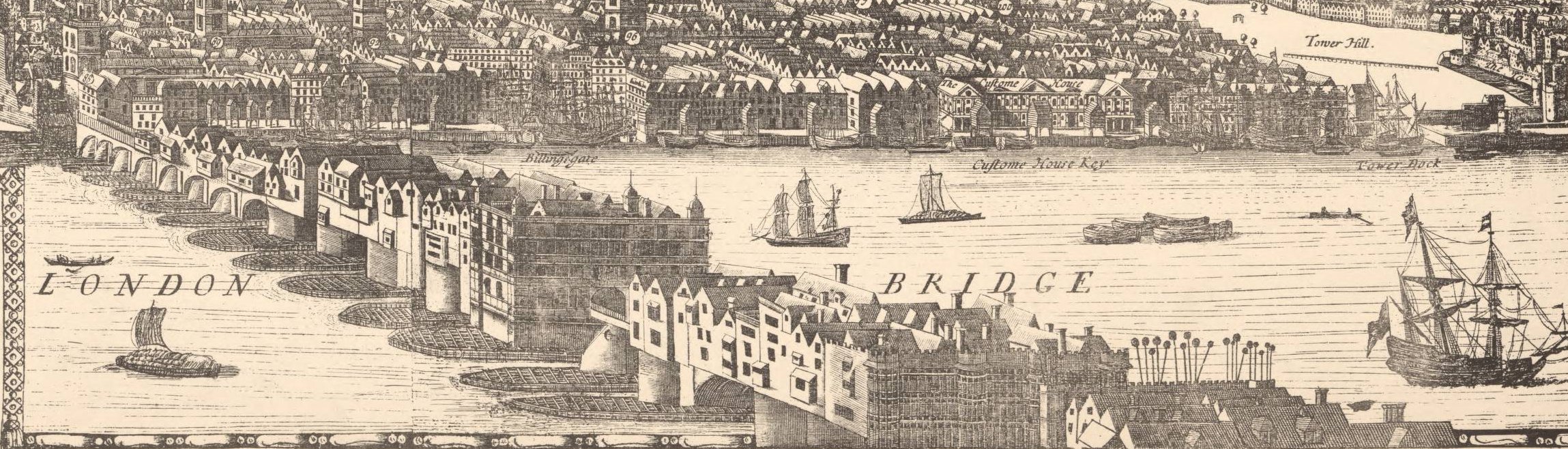
There were very few outdoor concerts then. So many people were interested in this performance that there was a three hour traffic jam (horses and carriages) on London Bridge as twelve thousand people made their way to the rehearsal a week before hand. The actual  event  one week later was not entirely successful – the day was rainy, many of the fireworks didn’t go off,  part of the staging pavilion caught fire, and two people died.


King George had insisted that Handel write the music for percussion, brass and woodwind instruments only – no strings  at all – and Handel followed these instructions for this special performance. Later, Handel rewrote the music for another indoor performance to include violins - so both he and the King got their own way.


This is a recording of the entireMusic for the Royal Fireworks. Can you see that the instruments look a little different to the ones you usually see in orchestras? These are ones that the musicians might have played in Handel's time. 

(*George II was the great-grandson of King James I)

Test your knowledge of instruments of the orchestra with this quiz.