Wednesday, 16 April 2014

2014 Term 1, Week 11: Elgar's Variation IX - Nimrod. Preparation for Anzac Day


This week we will be looking at some of the music associated with Anzac Day, and practising some of the songs for our Anzac Assembly  next term.

The Last Post is played to commemorate the war dead - at funerals or other public commemorations. It is also played on Anzac Day before a two-minute silence.

This is a video of the Last Post being played at the Anzac Memorial in Hyde Park in London.

Here's a video of the Last Post being played at the Gallipoli Dawn Service. Can you see the flags of Australia, New Zealand and Turkey?

This is Reveille played at the 2011  Dawn Service at the National War Memorial in Wellington.
What do you think is the purpose of the drums?

This is a recording of the Maori Battalion marching song sung in Maori.
Here's Howard Morrison singing part of the the Maori Battalion marching song.

Here's the Australian National Anthem - which we should know because they are responsible for the A in Anzac... 


This is called Nimrod by Edward Elgar.  It's from a longer piece of music called Variations on an Original Theme for Orchestra ("Enigma"), Op. 36, or the Enigma Variations for short. Nimrod is Variation 9.

Elgar was a British composer, who wrote this in the 1890s. It was not written about war at all, but it has come to be associated with Remembrance Day in Britain, and is often played at commemorative or solemn occasions.  Many people  have used this as background music when they create video memorials for loved ones lost in war.

The visual quality of this video is not that great, but you can really see the conductor (Daniel Barenboim) working to get the best feeling and sound out of the orchestra.It is a live recording so you can hear background noises.

Listen to  the music start softly and get louder and stronger.
Can you hear the themes in this music?
What instruments can you hear?
What instruments play for only some of the time? 
How does the conductor get the orchestra to play louder or softer?
Why do you think this piece of music became associated with commemorating those who died in war?

Vocabulary:

wreath -  an arrangement of flowers - often a circle - to place at the cenotaph in remembrance of thos who died in war
cenotaph - is an 'empty tomb' erected  in honour of people who are buried elsewhere - or  in unknown places
Last Post -  is music played by a bugle at military funerals or to commemorate those who have been killed in war
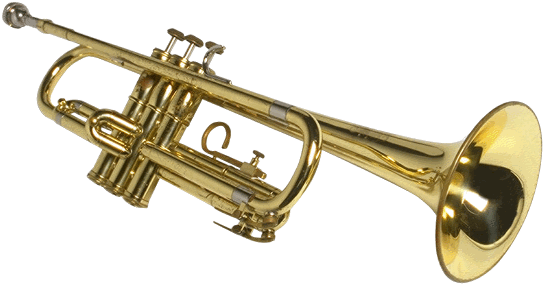
bugle - is a simple brass instrument, a bit like a trumpet, but it has no valves or buttons to press. The notes are played by moving the position of the lips. A bugle is usually used to play the Last Post and Reveille. Follow this link to read an article and see a video about a bugle that was used at Gallipoli by  New Zealand bugler and which will be used to play the Last Post and Reveille this Anzac Day.
The Ode - is a verse from a poem (For the Fallen by Laurence Binyon) which is said after the Last Post. One person usually says The Ode, then everyone repeats the last line, "We will remember them". After that there is silence of about one to two minutes.


Here's an interesting  link  called Last Post, First Light from the  Stuff  website.  It has lots of videos and articles relating to Anzac Day  and New Zealand's involvement in any conflicts from World War 1 onwards. It also includes interviews and videos of Anzac Day commemorations. It is updated any time a relevant article is added to the Stuff website.


Wednesday, 9 April 2014

2014 Term 1, Week 10: Beethoven's 5th Symphony


Ludwig van Beethoven
 Ludwig van Beethoven was born in December 1770, in Bonn in Germany.
His exact birthday is not known but he was baptised on December 17th, 1770. 

Beethoven's  mother's name was Maria Magdalena Keverich. His father, Johann, was a musician  and singer who worked at the court of the Elector of Cologne, in Germany.  Beethoven had two brothers who survived to adulthood. His father taught him to play the violin and piano, but he was very cruel and would punish young Ludwig whenever he made mistakes. He wanted his son to be like Mozart and would make him practise  the piano for hours.   Young Beethoven struggled with spelling and mathematics at school  - and throughout his whole life - and said that music came to him much easier than words.  He left school at age ten to study music.  By the time young Beethoven was 12 he was earning money composing and playing the organ.
Beethoven at age 13
Like Mozart, Beethoven was a child prodigy - but he didn't travel until he was 17 and went to Vienna where he had a few music  lessons from Mozart. He returned to Bonn  to help look after his siblings when his mother died and his father became an alcoholic. He played the viola in the orchestra for court and started to compose music. He was a also a very clever pianist.

He moved to Vienna again in 1792 and stayed there for the rest of his life.  He became very popular with the wealthy and important people.

In 1801 he started to lose his hearing, and by 1817 he was completely deaf and could no longer play in concerts, but he continued to compose.  Some of his greatest works were composed after he became deaf.
Beethoven in 1803

He is one of the best known composers of all time, and he wrote music for the piano, orchestras, and other groups of instruments. He wrote symphonies, sonatas, concertos,  chamber and choral music, and an opera. Many people are familiar with much of his music - even if they don't know that he wrote it.

Beethoven's music was very different to music that had been composed and played before. It was so original that other composers and musicians were inspired to change the way that they composed.

Beethoven never married. He proposed many times but was turned down every time  - possibly because he was very bad tempered and scruffy, and because he was of 'low birth' status.

 One of his favourite foods was macaroni and cheese, and he loved strong coffee - with exactly 60 beans to one cup.

Beethoven's funeral procession
Beethoven's Grave in Vienna
 
He died on March 26th, 1827 - in Vienna - and many thousands of people  lined the streets to pay their respects.

This week we are looking at Beethoven's Symphony Number 5 in C Minor - the first movement.
This movement is written in a very common format in classical music called sonata form. Sonata form has roughly four sections.

The first section is called the Exposition. The main themes of the symphony are laid out. Then we move into the Development, where the themes are broken down and played around with (a bit like improvisation). Then we come to the Recapitulation where the main themes return again (slightly different, but mostly the same). Finally, there is a Coda, which is the ending where the whole movement is wrapped up.

 This is a live performance of  Beethoven's Symphony Number 5 - first movement.  This conductor is Gustavo Dudamel.  Watch for all the different ways he uses to get the orchestra to play louder or softer, stronger, smoothly,  or faster or slower.
- Can you hear a person in the audience coughing occasionally?
- Can you see how the orchestra and the conductor could find this distracting?  
- What sounds and patterns can you hear repeated?
- How does Beethoven make the repeated sounds different each time?

Here is a black and white video  of  the conductor Arturo Toscanini conducting Beethoven's fifth symphony - first movement. There is a commentary written along the bottom of the video explaining what is happening.


Look at pages 4 and 5 on this pdf to see a listening map for Beethoven's 5th Symphony.

Here's a bit more of a complicated listening guide with lots more music vocabulary and symbols.
And here's the answers to the questions in the listening guide. 


 Here is violinist David Garrett playing a modern arrangement of this - with dancers in the performance as well. How many instruments are there playing which would not have been around for Beethoven?

Here's another modern arrangement - Beethoven's 5th in salsa.

Here's the music - changed round a bit - with krumping / hip hop.  

Here's a fun version. Timon  is trying to conduct Beethoven's 5th, but Pumba keeps changing it to a different style. Watch how Timon conducts.

Here's another fun version where some musicians are using boomwhackers on plastic drums to beat out the rhythm of Beethoven's 5th.

Here some singers have made up a song about pumpkins  (called gourds here) to promote their churches Great Pumpkin Giveaway.

And this is just someone having a bit of fun making silly sounds into music.

Here's a group called Beethoven's Wig - and they've made up a song about Beethoven's wig. 

Here's Rowan Atkinson (Mr Bean) conducting an (invisible) orchestra. What makes it funny?

Air guitar time - to Metallica! These are just still photos, but you can see some pretty good moves to follow.

And here's Swedish guitarist and songwriter Yngwei Malmsteen with a classic guitar version - from 1985, so the video quality is not thaaat great.

This is quite a bit longer, but funny- especially if you understand anything about music and sport.  There are two commentators talking over the top of the music as if they were  the commentators at a sports event.

Here's a graphic score of Beethoven's Fifth. Can you see the patterns of the short, short, short, long?

Here's the score  of the beginning of the this music. Can you follow it?

Here's Walt Disney's Fanstasia version of Beetoven's 5th symphony.

This is a fast version - played, apparently, at the speed Beethoven intended it to be. the conductor is Benjamin Zander.

 This movement is written in a very common format in classical music called sonata form. Sonata form has roughly four sections.

The first section is called the Exposition. This is where the main themes of the symphony are laid out. Then we move into the Development, where the themes are broken down and played around with (a bit like improvisation). Then we come to the Recapitulation where the main themes return again (slightly different, but mostly the same). Finally, there is a Coda, which is the ending where the whole movement is wrapped up

Wednesday, 2 April 2014

2014 Term 1, Week 9: Mozart's Turkish March - Rondo alla Turk


Wolfgang Amadeus Mozart was born on January 27th 1756 and died on December 5th 1791, at age 35.  He was born in Salzburg in Austria, where his father, Leopold, was also a musician and composer.

Wolfgang's family called him Wolferl. He was called a child prodigy which means he could do something extremely clever at a very young age. He composed his first piece of music when he was just 5 years old. He was 7 when his first music was published, and when he was 12 he had written his first opera. He was an accomplished violinist and pianist by the age of 6, and he and his sister Maria Anna (called Nanner by her family) travelled around Europe giving concerts and even performing for royalty. Nanner was a very clever musician and composer herself, but she stopped travelling and giving concerts once she reached marrying age.


When he was older, Mozart moved to Vienna to earn a living as a composer and pianist.  He was used to being a famous child musician and having a great fuss of him, so it was difficult for him to settle to being an adult performer and not the centre of attention anymore - even though he was still a musical genius.

Mozart married Constanze Weber in 1782. They had six children, but only two survived past infancy. He earnt a lot of money in his life time but wasted it and ended up dying of kidney disease at 35 years old. He was buried in a common grave with no special ceremony.

Mozart composed an enormous amount of music in his short life. It would take over 8 days to play all his music without stopping. He also composed in a wide range of musical forms, such as operas, symphonies, concertos, masses, and chamber music.


This week's music is called: Turkish Rondo from Piano Sonata in A, K. 331. It's also known as Mozart's Turkish March of Rondo alla Turk.

Here's a version  of it on the  glass harp (glasses of water filled with water). This musician uses sticks instead of wet fingers to achieve his special sound. This piece uses an orchestral backing track.

Here's two people playing musical glasses with no accompaniment.

Here is an orchestra dressed in the clothes of Mozart's time. How many instruments can you name? 

This group is a Russian group called  Soprano 10 and they play violins as well as sing Rondo a la Turque.

This woman plays a jazz version on some of the 50 pianos around the streets of London during a festival.

Here's a jazz version played by a guitarist.

Air guitar time!

Here's the drumming video which we seem to be able to find for most of our music choices.  How many drums and cymbals can you count?

And here's David Garrett playing Rondo alla Turk with  a modern orchestral backing.

This is a clever - and fun - version of the music made by recording men singing different notes then using each note to represent a key on the piano. Which keys are used the most and which are hardly used at all?  At the end, you will hear the two makers of this video talking in Spanish.

Here's a music map of Rondo alla Turk. Can you see a pattern? 

Try this different listening map and see if you can follow it. It shows the rondo form of music. It comes from this teacher's music blog.

This is a powerpoint showing the rhythm pattern of the music in each theme of the rondo. Can you keep up while you are following it?  

This shows you what the music looks like if you were reading it while playing the piano.  

And this one is just a little crazy - and funny. No animals were harmed in the making of this video. 

Here is a video of a violinist and a pianist having a bit of fun with this piece of music at a concert in the Netherlands. The pianist wants to change the key from a minor key to a major key. 

Here are two people playing the this music on the one guitar at a concert in Poland.

Here's very fast song version of the rondo.

Here's the biggest piano keyboard you may have seen.

A 5-year-old boy plays this on the piano.

This is what it looks like when you are playing the piano. Look for the ascending and descending notes. 

And for the adults: This is the group called Beethoven's Wig singing a song to the tune of Ronda alla Turca. It's all about the Mozart effect - where children are supposed to  be smarter if they listen to a lot of Mozart. This is

Here's a game you can play while learning more about Mozart.

This is an interesting site where you can learn a lot more about Mozart.

Tuesday, 25 March 2014

2014 Term 1, Week 8: Hungarian Dance #5 by Johannes Brahms


A Hungarian Dance
Johannes Brahms was born in Germany in 1833 and died in Vienna in 1897 - two years before Johan Strauss II died.
Brahms in 1853
His father was a musician and played the double bass.  Johannes learned the piano  when he was young, and he was  a talented musician and composer.  When he was growing up in Hamburg, in Germany,  there were many Hungarian musicians in his home town. Brahms liked their folk music and it influenced a lot of his own compositions.

Brahms was close friends with many other famous musicians of the time: Franz Liszt , Robert Schumann and his wife Clara, and Johann Strauss II. (Brahms said that he wished that he had written The Blue Danube which was composed by Strauss.) He eventually moved to Vienna and lived there  until he died from cancer in 1897. Wagner, another famous German musician, also met Brahms in Vienna and did not like him, saying he was a bad conductor. Wagner was afraid that Brahms might compose better operas than his, but Brahms didn't write operas, anyway. It was true that Brahms was not a very good conductor, so he got someone else to conduct the music he composed.
Brahms and Johann Strauss II

Here's some more easy-to-read information on Brahms.

This lullaby is possibly his most well known music.

Brahms wrote 21 Hungarian dances, based on songs and music he heard by the Hungarian musicians in Hamburg. We are going to  learn about Hungarian Dance Number 5 - one of the most well known of them. It is based on a violin tune, with heavy brass in the background, percussion in the middle section and the finale goes back to the original violin theme.  We are also listening for changes in tempo (how fast or slow the music is playing) and dynamics (how loud or soft the music is).

  Look for the music map and see if you can follow it while we listen to the music.

Here's an orchestra playing Hungarian Dance Number 5 played by an orchestra.  Watch how the conductor get the orchestra to go louder or quieter, faster and slower. Can you see and hear the triangle in this?

Here are some different arrangements and version of Brahms Hungarian Dance Number 5. 
Here's something you can try at home  using every day glasses as a musical instrument - but ask permission first. 

this man has made up his own instrument - called a bellophone - and plays his version of Brahms Hungarian Dance Number 5 on it.

This is a version played on 3 guitars - backstage at a concert in NZ.  The lead guitarist is Tommy Emmanuel - a well known  Australian guitarist.

 This is what it looks like when it's played on the piano.  This is a duet. (Two players - four hands on the same piano.) And here's two boys actually playing it together on the piano.

Here's a funny version with a conductor  and Andre Rieu's orchestra. Notice how for this performance the audience are expected to participate - not just sit quietly. 

Here's a violinist having a bit of fun with the person who turns the pages of her music during her performance. 

Here's another violinist called David Garrett who plays a very fast version with an orchestra with some electric instruments accompanying him. What instruments can you identify?  

This is what it would look like if you tried to play it on the piano. Can you see where the music ascends and descends?

Here is one of the first movie stars - Charlie Chaplin - in a scene in a barber's  shop. Watch how he makes all his movements fit the music. 

Here's a Looney Tunes cartoon of the Three Little Pigs, using Brahms Hungarian Dances #5, #7, #6  and #17 in that order.  What changes do you think were made to make the music fit the story and soundtrack?


And should you eventually want to dance yourself to Hungarian Dance Number 5 - just follow these guys. Here's a class of students having a go at this dance.

Here's Brahms Hungarian Dance #6    Listen for the changes in tempo (speed) and for louder and quieter music.  Watch out for a few loud surprises.


Tuesday, 18 March 2014

2014 Term 1 Week 7: The March of the Toreadors by Georges Bizet

 This week's music is The March of the Toreadors from the Opera Carmen by Georges Bizet. He was born in Paris, France, in 1838 and died in 1875.

Both his parents were musicians and they wanted him to be a composer.  Young Georges loved music, but he also  loved reading and his parents even hid his books so that he would spend more time on his music.
 Georges Bizet
He went to a special music school and won awards for composing and playing the piano.  He wrote one symphony but he is most well known for composing operas.

 His most famous opera is Carmen, but when it first opened in Paris  it received terrible reviews, saying there were no good tunes in it at all.  People believed the reviews and audiences stayed away.  Before the  season had finished, Georges died, aged only 36.


Four months later, the opera opened in Vienna, in Austria, and the audiences loved it. It became very popular and it is now one of the most well known and popular of all operas.


An image of the Opera Carmen by George Bizet
Map of Spain and France
Carmen is set in Seville, in the south of Spain.

Carmen is a gypsy girl  who works in a cigarette factory. She falls in love with a soldier called Don José, who loves her. However, he has already promised to marry somebody else. Later, he leaves the girl he was engaged to and the army for Carmen. Running away together, they are happy for a while until Carmen decides she loves a bullfighter called Escamillo. She leaves Don José. One day when Carmen is watching a bullfight, Don José waits for her and then tries to make her come back. She refuses, so he stabs her to death. Horrified at what he has done, he goes to jail. (From Simple English Wikipedia)

This video has excellent sound quality of The Toreadors conducted by Zubin Mehta who we also have a video conducting the Tritsch Tratsch polka last week. 

Air guitar version of The Procession of the Toreadors 

Here's a dance to the Toreador. 

Here's someone having a bit of fun pretending to conduct an orchestra playing the Toreadors. Listen
for the music getting faster and slower.  He also plays some of the instruments himself - and has a bit of fun with a bull.

This video gives you  a good view of the kettle drums being played. You also get to see another style of conducting.

And this one is just a very clever - and fun - way to play The Toreadors music.

The video below tells a story using the Toredors as background music. Watch how the movements and actions have been made to fit the story.  This music plays quite fast.


This video gives you a good view of the cymbals being played, as well as the kettle drums and the triangle. Watch for all the different moves the conductor uses to make the orchestra go louder or softer or stronger.


This conductor had a bit of fun with The Toreadors. How do his movements relate to the music?

Here's a very early Mickey Mouse Cartoon (1929). It's a funny version of the part of the opera Carmen. How much can you recognise?  There is some other well known music as well as the Toreadors in this. This was made in the days before colour movies.

Here's Andre Riue at an outdoor concert - where the audience are expected to cheer and clap along with the orchestra. You get to hear the brass section particularly well in this video.

And of  course, the piano keys playing the music with the graphic notation. Look for where the music is ascending and descending.

Here's a fun version called Bull in a China Shop  by a group called Beethoven's Wig

This video shows you an extract from the opera where the toreadors are marching. The singing is in French but the subtitles are in Spanish.


Tuesday, 11 March 2014

2014, Week 6: Tritsch Tratsch Polka by Johann Strauss II


Johann Strauss II  (or Johann Strauss Junior) was born in Vienna in1825, and he died in Vienna in 1899. 
Johann Strauss II

He was an Austrian composer and the son of Johann Strauss Senior (or Johann Strauss I), who was also a very famous composer. 


Strauss Senior wanted his son to become a banker, but young Johann took violin lessons in secret. 

When he was 18, he got his own orchestra together and performed some of his own music as well as some of his father’s.  Young Johann became very famous for his waltzes – he became known as the king of waltzes and the most famous musician in Austria -  and soon became more famous than his father. 

The waltz was a daring new dance and,  at the time, many people were scandalised  that people held each other so close for the entire dance. 


After his father died, Johann joined both his own and his father’s orchestras together. He became very busy during the annual Venice carnival when there were lots of balls in Vienna, the capital of Austria.  

 He travelled around Europe and Russia and even conducted some of Tchaikovsky’s  music. 


Johann Strauss II wrote two operas: Die Fledermaus (The Bat) and Zigeunerbaron (Gypsy Baron).


His two brothers, Josef and Eduard, were also very musical and they joined Johann to compose and play some of this most popular  waltz music of all time.  

Europe at the time of the death of Strauss.
Tritsch-Tratsch-Polka  was written in 1858 after Strauss returned from a successful tour of Russia.  O There are several thoughts on what the title means, but it is most likely to mean the same as “chit-chat”  and refers to the name for gossip - which was abundant in those days in Vienna,  as everyone wanted to know everyone else’s business. 

 Here is the Vienna Philharmonic Orchestra playing the Tritsch Tratsch Polka at an outdoor concert - in Vienna.

Here's the New Zealand Symphony Orchestra playing the Tritsch-Tratsch polka in 1984.  You can see all the different instruments that are played in this, and you can see one of the many different styles of conducting 

Here's an excellent quality video of an orchestra performing the Tritsch - Tratsch polka. How many instruments can you name? Listen for the triangle. Copy the conductor's movements and you be the conductor for this performance. 

Watch the cymbals player in this video clip.

Here's Andre Rieu's orchestra having a lot of fun playing this polka on a tram in Vienna.

 Here is the Hungarian National Ballet rehearsing to this music. Can you see the story that is being told by the dancers? 

This is an excellent quality video of the Fernsehballet (a ballet company from Germany) performing a very fast version of the Tritsch - Tratsch polka, with a few variations. 

In this video, a group of male dancers tell the story of a soccer game to the music of the Tritsch Tratsch polka.  The quality of the video isn't great, but you will still get the idea.

This is a slower version of the Tritsch-Tratsch polka because there is a group of people dancing a polka to it. Even so, they have to move pretty quickly. How many different kinds of dance moves and steps can you see?

Here's how it looks when you play it on the piano. Can you see where the notes are ascending and descending? 

Here' the Vienna Boys Choir singing the Tritsch Tratsch Polka (it's in German - I think.)

Here's a drummer  doing his version of the Tritsch-Tratsch polka  - with some pretty clever lighting effects, and captions which say Merry Christmas  in many languages - including a few fun ones at the end.

This is fun. It's a musicogram of the Tritsch-Tratsch Polka, with drawings to represent the music. See if you can follow it.

This is one very clever young girl. See if you can do what she's doing.


Here's a fun cartoon version of part of this piece of music.

Here's another cartoon version - with Minnie Mouse.


Click on this link to see what the music looks like as it is being played by a piano.

Wednesday, 5 March 2014

2014, Week 5: Flight of the Bumble Bee by Nikolai Rimsky-Korsakov

Here is a Russian orchestra playing the Flight of the Bumblebee.
<
Here's a longer version of the Flight of the Bumble bee. It's from an outdoor concert.

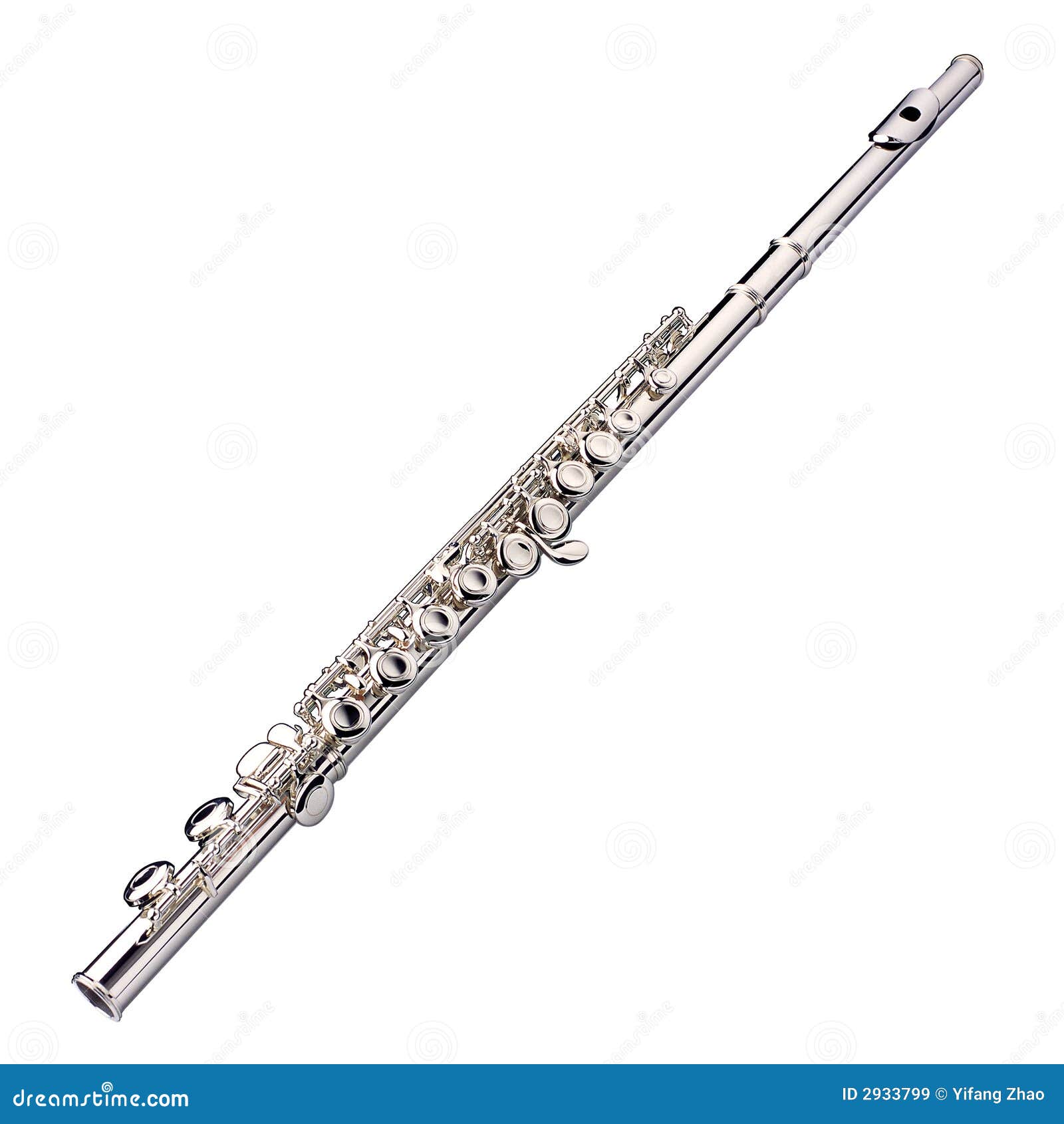
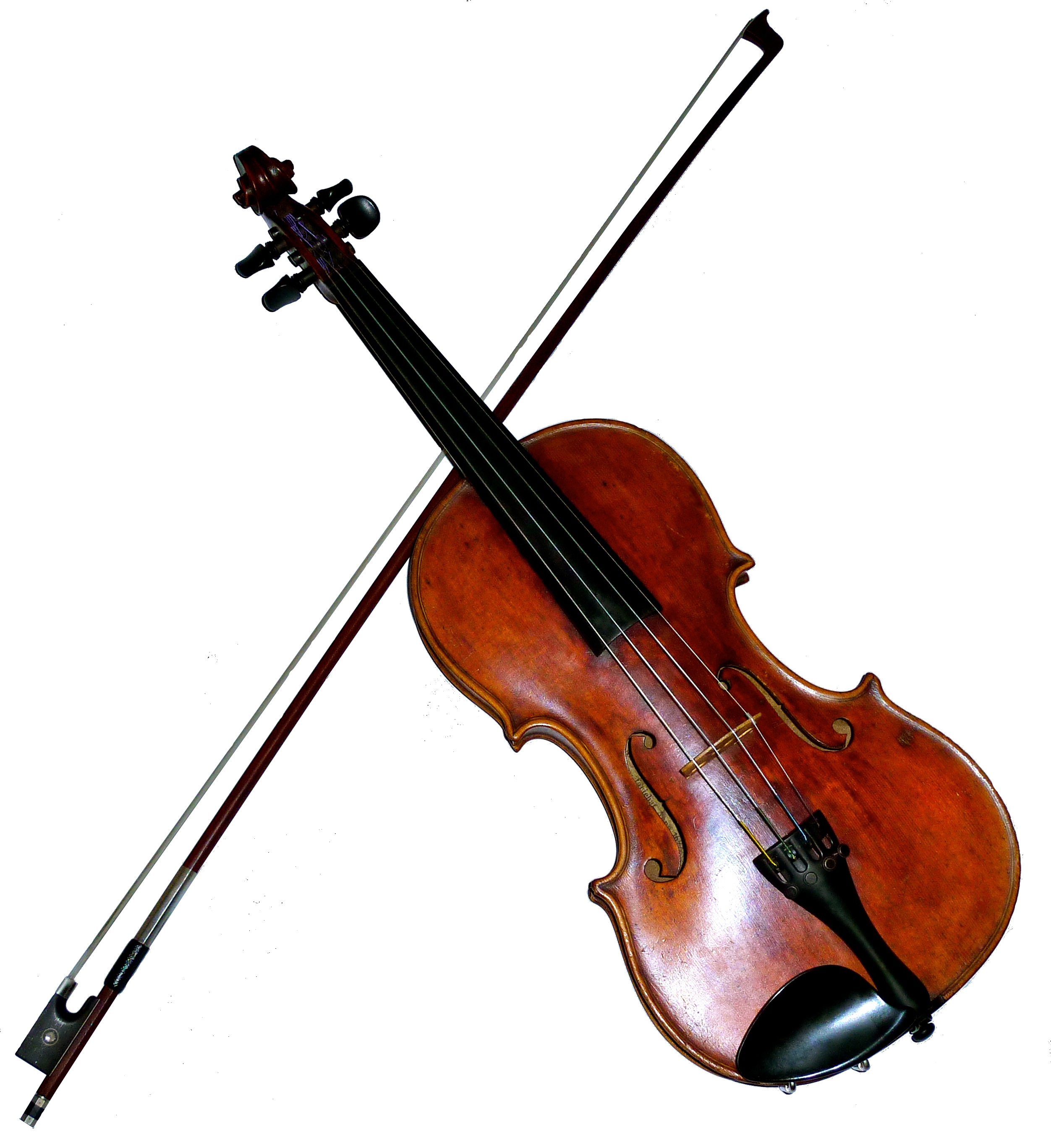
Look and listen for: flutes and violins.

How does the composer make this music sound like a bee? 

Here's a very short extract from the Flight of the Bumblebee from the Muppets.  

This is one of my favourite fun versions of the Flight of the Bumblebee done in 1981 by Danny Kaye.  

Here's someone having a bit of fun with the Flight of the Bumblebee. It's a lot harder than it looks. Try it at home!

Here's the world's fastest violinist, David Garrett, playing Flight of the Bumblebee in record time.

Here's a graphic visualisation  of what it looks like to play this on the piano.


Here's another version of  graphic notation of the score.

And here's a great adaptation of the Flight of the Bumblebee  from 1948 called Bumble Boogie

Here's a worksheet you can print or just read it and find out a bit more about the composer Nikolai Rimsky-Korsakov.


Here are some real bees. 

Here's some more information about bumblebees by David Attenborough 

Vocabulary:
ascending - going up
descending - going down
chromatic scale - playing all the keys in order -including black as well as white keys


Here's some real bees from the Huia 1 garden.


Thursday, 27 February 2014

2014, Weeks 3 and 4: Finale to William Tell Overture.


William Tell shoots an apple off his son's head.


Here is a video of an orchestra playing the finale of the William Tell Overture. We practised sitting very still and quiet while watching the orchestra and pretended we had paid a lot of money to go to a concert theatre  to watch them play.


  Sometimes, at special performances, it's OK  - and expected - for the audience to cheer and clap and dance to the music. This is usually when the orchestra is playing really popular and exciting music at an outdoor family concert. Check out this video of a very colourful outdoor concert, and see how the conductor encourages the audience to join in.

Here is an orchestra from the Philippines playing the finale of the William Tell overture. Watch how the conductor tells the orchestra to play quietly.  Can you see - and hear - the triangle being played?

Here's your chance to practise your air guitar to the Finale of the William Tell Overture.

Here's an interesting graphic animation of the sound of the music. Follow an instrument from the beginning to the end.

And a Line Rider video to get into the Winter Olympics feeling.

This is a listening map to show you the changing dynamics (loud or soft) in the William Tell Overture. 


 Here's a video made by school children. Look at how the children use their faces and body language to help tell the story.

A body percussion video to follow 
A story of William Tell. There are many versions of the story. This is one of them. And another story - just for listening. 

Here's a very old television programme about one version of the William Tell story.
It's 24 minutes long - but it gives a good idea of the background. It may be a bit different to the version of the story we did in class.

And here's a high school choir having a bit of fun with the William Tell Overture.

Here's a map of Europe. Can you find Switzerland and Austria? The borders of these countries were very much different in the time of William Tell -  in about 1307 - but it gives you an idea.  


Check out your air drum skills with this video.

Here's a video for Mums - based on the Willliam  Tell overture.

And here's a Danny Kay version of William Tell 

Vocabulary from this week's lesson:
tyrant - a bully
ambush - to hide and then  attack someone by surprise
quiver - a container for arrows
 

Wednesday, 26 February 2014

2014, Weeks 1 and 2: March of the Nutcracker by Tchaikovsky

We are learning about the instruments of the orchestra: what they look like, what they sound like, and what section of the orchestra they belong to. 

Here are some of the things we learnt about in our first music lessons this year.


Here is a video of an outdoor concert of the March of the Nutcracker. The conductor is Seiji Ozawa from Japan. 

We pretended we were playing some of these instruments, and we pretended we were the conductor. 

How many instruments can you name?


Here is a video showing some of the instruments which are played in the March of the Nutcracker.

It also includes some symbols to show you when the music is getting louder or softer, or when the music sounds as if it is going up or down.
 

Here is a video of the part of the Nutcracker ballet which has the dance for the March of the Nutcracker.  It shows a group of boys and girls at a Christmas party. Watch for the ways that the boys show they expect to grow up to be soldiers. 

Here is the heavy metal electric guitar version of the March of the Nutcracker so you can practise your air guitar. 

Here are some of the new words we learnt in the first lesson: 

Sections of the orchestra: 

woodwind: flute

percussion:cymbals